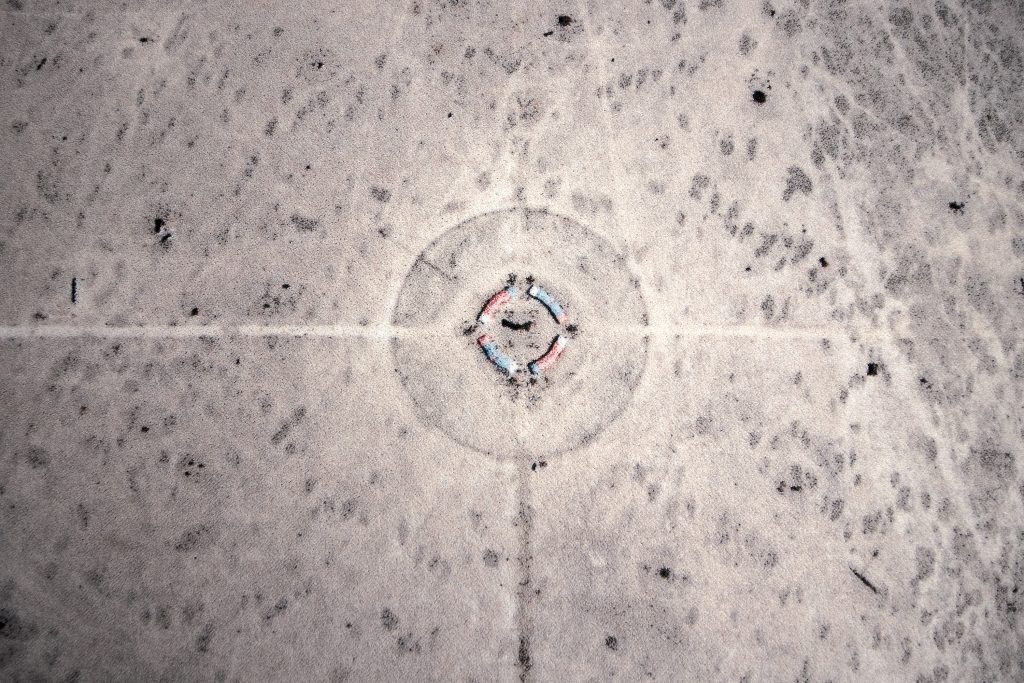
Spatial intervention, printed carpets, audio installation, 2017
8 images 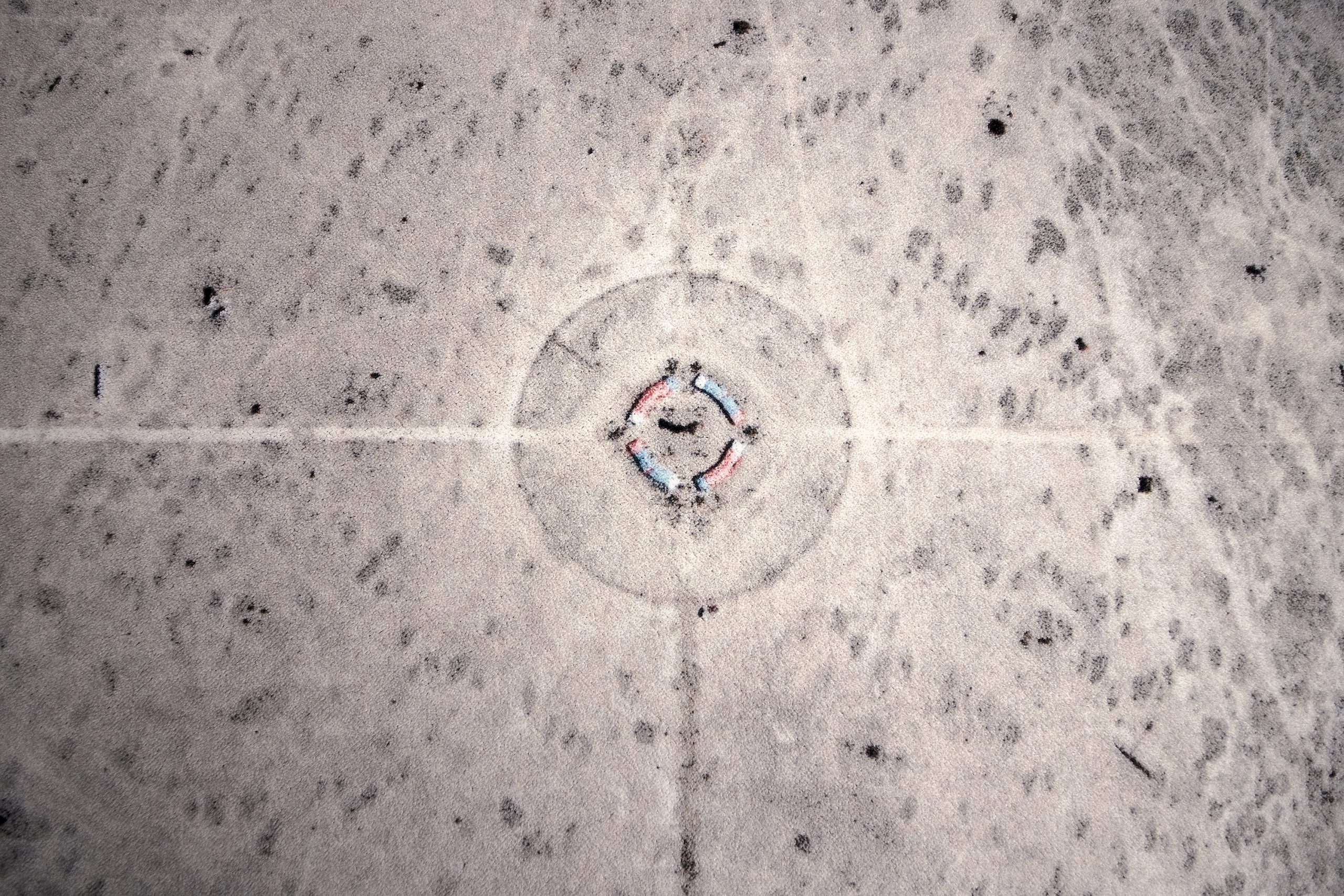 The installation includes carpets printed with satellite images of various temporary cities, as well as documents, books and sound on their material forms, politics, sociologies, economies, and aesthetics. These heterogeneous urban forms are spread across the globe, but are all characterized by ephemerality. On the carpets they are related and confronted: a refuge with a festival, a market with a military camp. While these forms often share materials and structures, they exhibit the inequity that exists between the North and South, between citizens and non-citizens, between the Oktoberfest and Talad Rom Hoob, a railway market in Thailand.

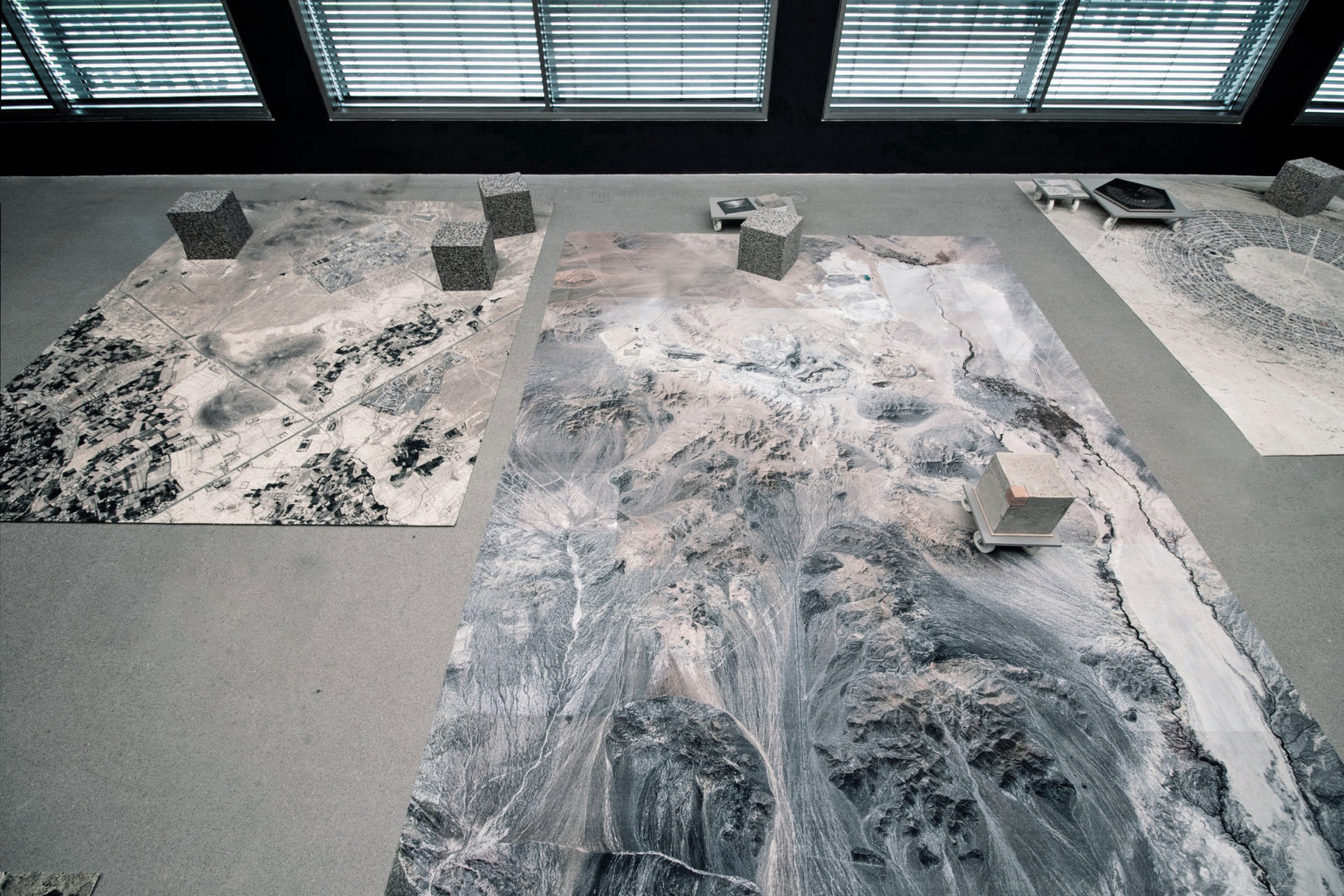
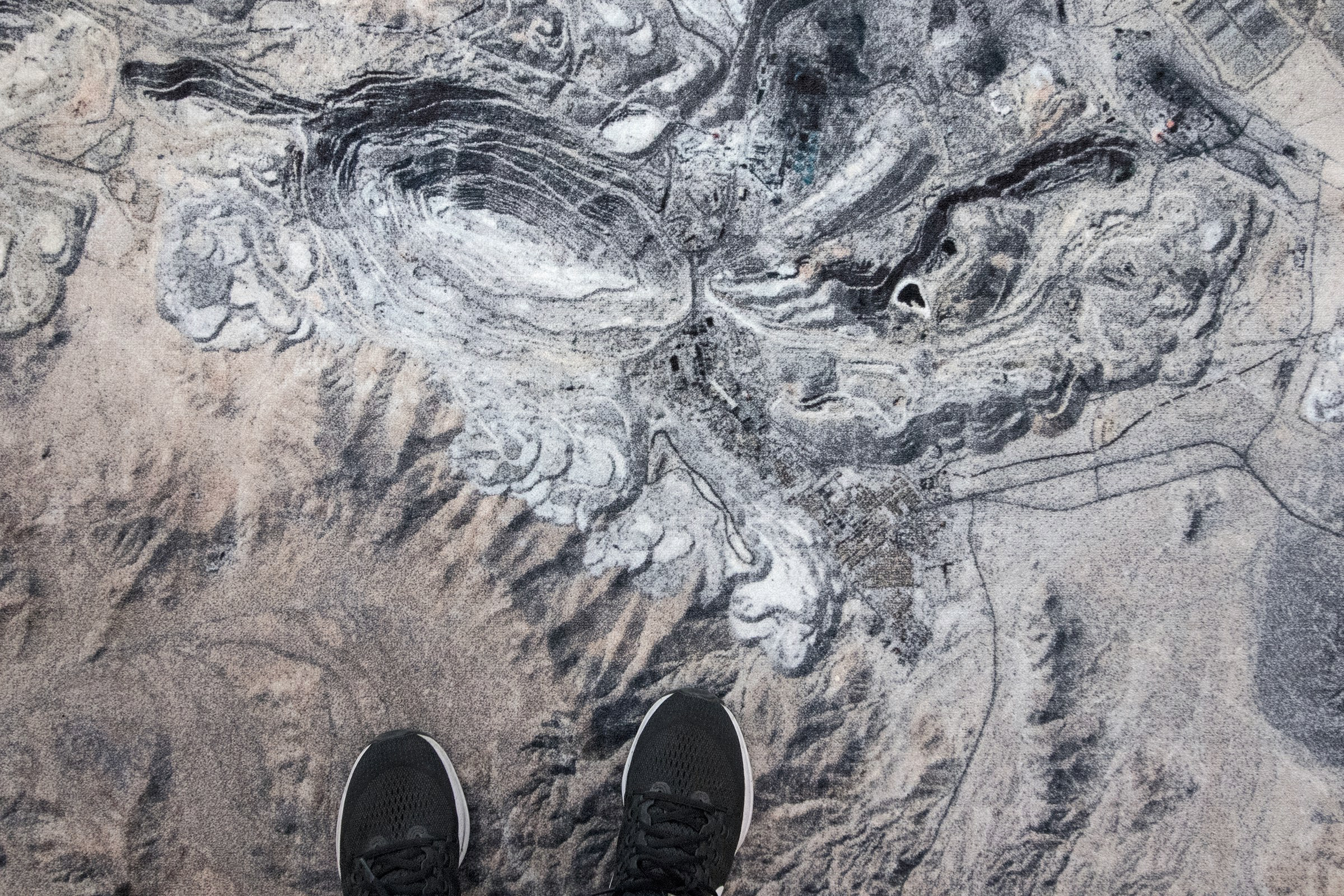
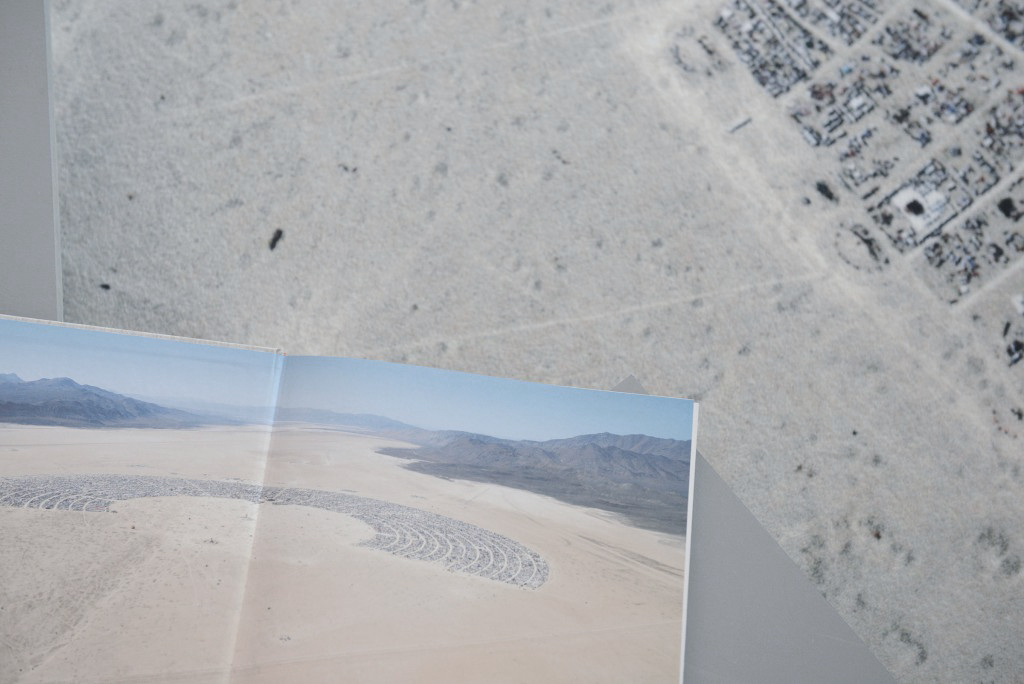
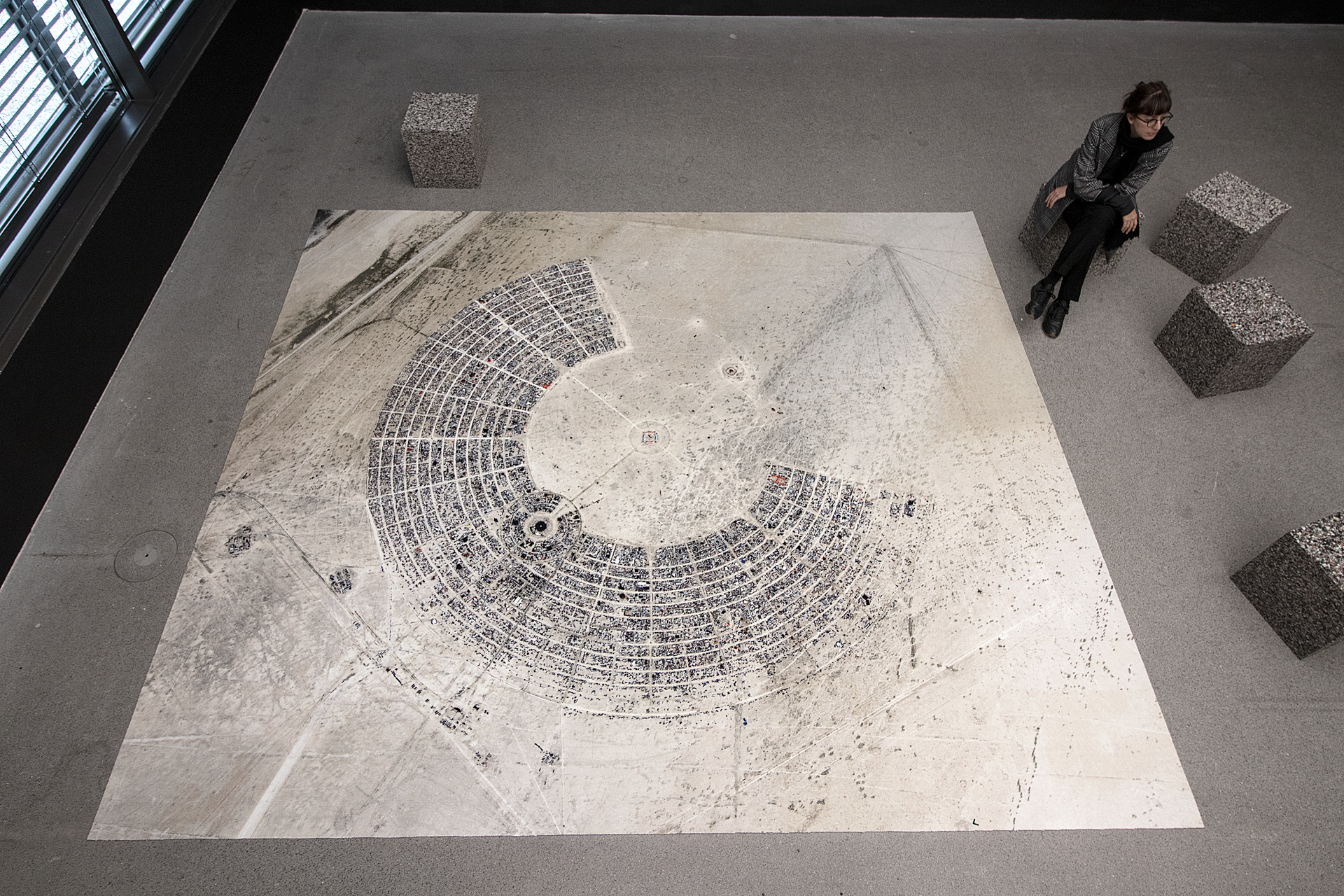
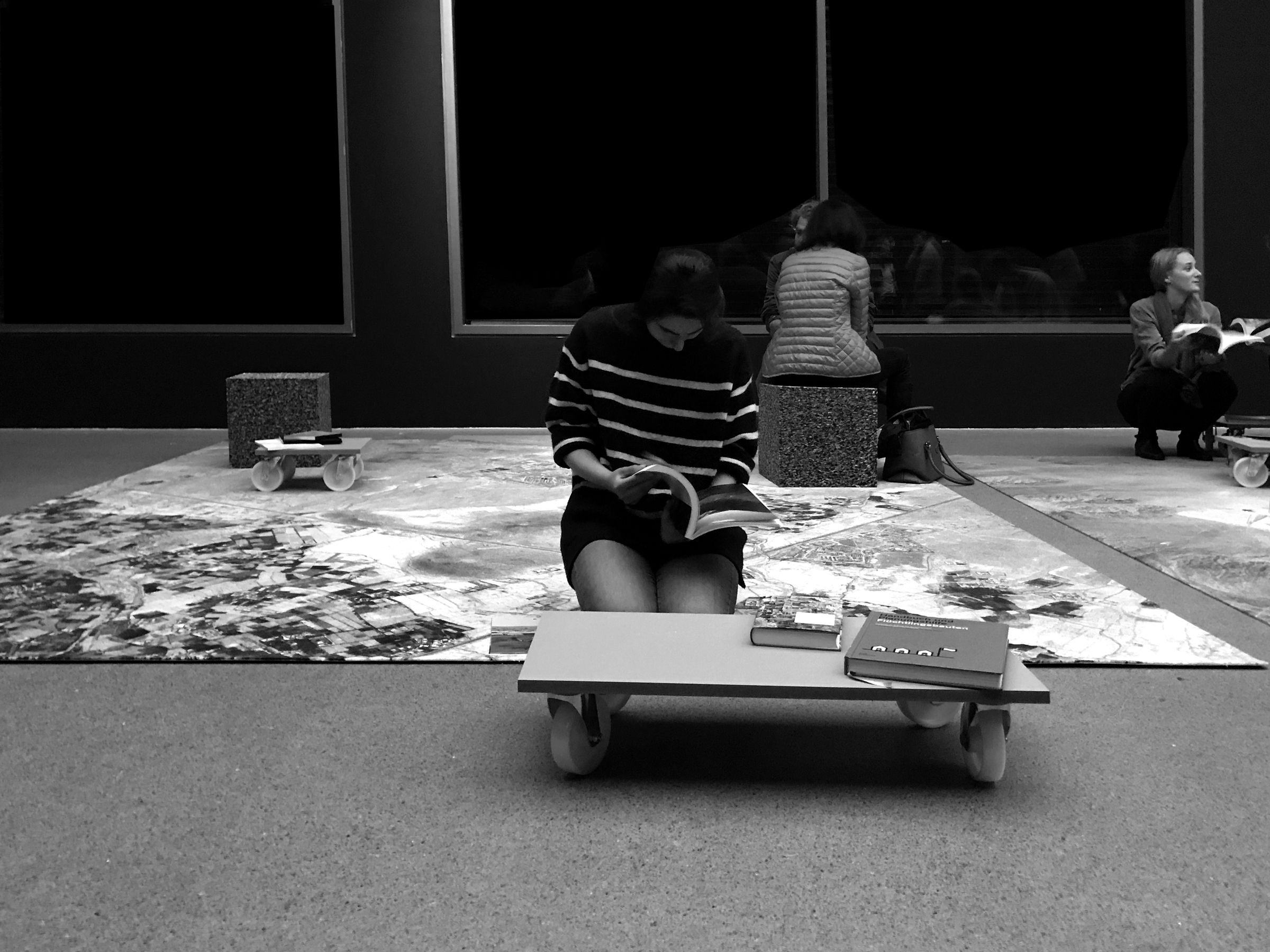
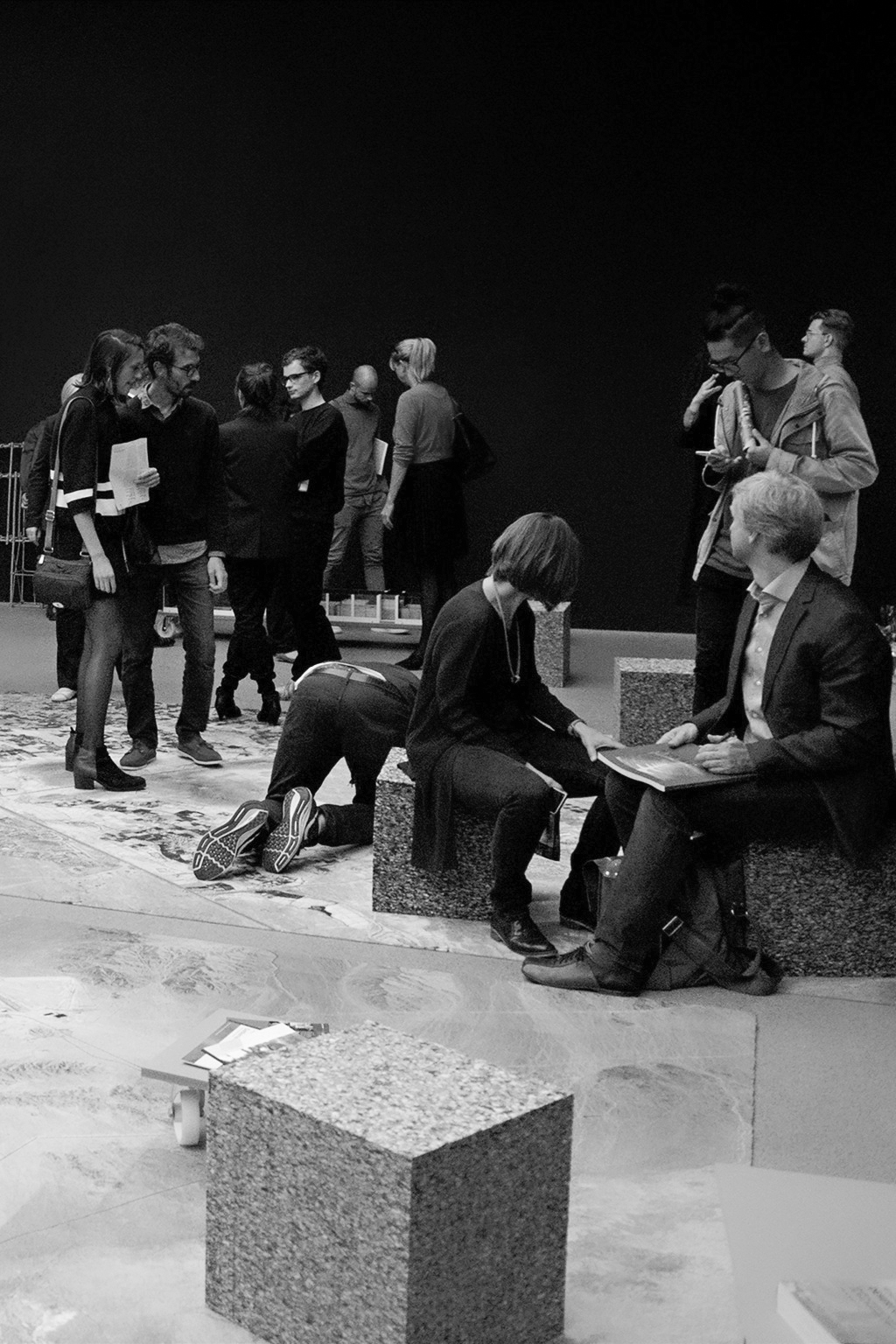
The audio piece contracts field recordings from heterogeneous ephemeral urban phenomena taking place remotely but often simultaneously. Throughout one year, sounds from different temporary cities across the globe, a festival in Germany (Oktoberfest) and a celebration in India (Kumbh Mela), overlap with noise from a railway market in Thailand (Talad Rom Hoob), a military camp in Afghanistan (FOB Lightning), and an extraction site in Chile (Chuquicamata) etc.
Two books in the installation:
The books of festivals (Ottoman: Sūr-nāme) were written and drawn to give detailed account on the Ottoman festivals that were famously lasting 40 days and 40 nights. These illustrated albums recount the celebrations in the Ottoman Empire from Renaissance time to the 19th century. They include the temporal order of processions, grand entrance of the Sultan, feasts, entertainers, musicians, dancers, gift giving, firework displays, circumcision and wedding ceremonies. They also contain information about the ephemeral elements that were developed by architects to serve the festival and spectacle. In 1582, Ottoman architects designed a moving vehicle which was carrying a blooding hand and foot separated from its body. Also in that year, architect Ibrahim Efendi designed performances on ropes over the Golden Horn, the waterway inlet of the Bosphorus and thus turned the event into an acrobatic show.
In his media theory French philosopher Régis Debray retells the story of the exodus of the Israelites from Egypt as the invention of the portable God. As a wanderer, Israel could not offer an altar or a statue to their God. Following Debray, they therefore declared these heavy objects as anyway forbidden. Instead, the Israelites developed light-weight objects like the tefillin, mini leather boxes containing scrolls of torah verses, to be read through magnifying glasses. In a materialist interpretation Debray asserts that these religious devices not only allowed transportation but also meant transformation: Transmission is not a simple transfer from a sender to a receiver, but “a chain of incessant transformations”. In these transformations “sender and receiver are modified from the inside by the message they exchange, and the message is itself modified by its circulation. He concludes: In transit, the Judaic God became a-topical, but accessible at any place and time. If we look at social media, digital market places, or online games today, all of them constituting sort of ephemeral cities, we might ask with Debray: in what ways do they transform the city as we know it?
Does Permanence Matter?
Pinakothek der Moderne, Munich 2017